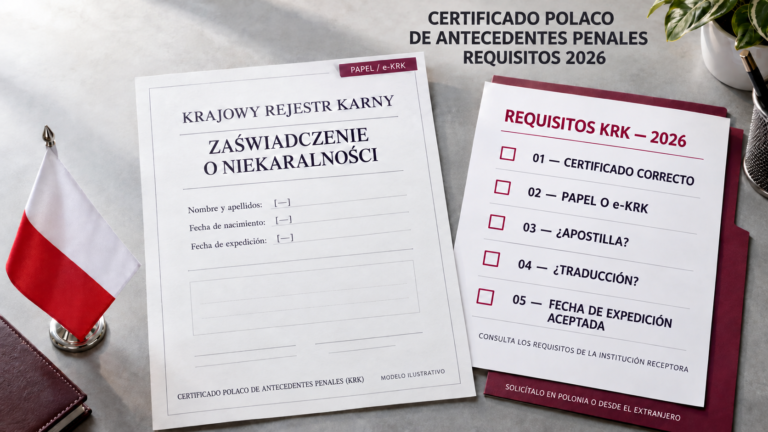
Why the Difference between KRK and e-KRK Matters for Visas
Securing a clean criminal record certificate from Poland is a vital step for international mobility. However, selecting the wrong document format frequently triggers immediate visa application rejections by strict foreign consulates. Understanding the precise difference between KRK and e-KRK options determines whether your file succeeds or fails abroad. Applicants must navigate two separate administrative mechanisms managed by the Polish Ministry of Justice.
The traditional process yields a physical document featuring a wet ink signature KRK validation. Alternatively, the electronic track delivers a cryptographic file via the state public platform. Both pathways verify your non-criminal status within the National Criminal Register. Yet, their international legal utility varies dramatically depending on your final destination country. This analysis reveals the structural variances between these formats. We help you choose the correct version for your specific global mobility dossier.
The Cryptographic Foundation: Anatomy of the e-KRK System
The digital e-KRK portal provides rapid background checks for users with authenticated digital identities. This electronic path generates an XML document containing an electronic seal Poland security layer.
Furthermore, this cryptographic file remains legally valid only in its native digital format. You cannot simply print the file for physical submission. Printing the document strips away the digital validation keys. As a result, a physical printout carries zero official legal weight.
This data architecture is managed under rules from the Polish Ministry of Justice. The system checks the digital signature against state public keys. For internal European corporate workflows, this digital certificate offers maximum efficiency. It accelerates background checks for highly qualified talent within EU borders.
International enterprises utilize this system to streamline executive onboarding. The digital portal connects directly to the central criminal database. The database functions under regulations visible in the Polish Sejm Legal Acts Database. Foreign directors often utilize their ePUAP trusted profile to access this platform. This authentication method ensures rapid corporate compliance tracking.
Corporate compliance administrators prefer automated checks for high-volume recruitment. The electronic system cross-references data with the National Court Register (KRS) efficiently. In addition, this portal serves as a reliable background check for domestic legal transactions. It satisfies standard local compliance regulations instantly.
The Polish National Criminal Register connects directly to the European Criminal Records Information System. This integration allows the seamless exchange of background check data across EU member states. Consequently, the electronic e-KRK file serves as a comprehensive record within the European Union. It includes criminal history data from an applicant’s home country automatically.
Technical Specifications of the Electronic Format
The digital output uses a structured XML framework. This data arrangement holds the encrypted signature data securely.
Consequently, any alteration to the text destroys the integrity of the file. The document immediately becomes invalid if modified. The validation software checks the cryptographic hashes against government registries. Any variance triggers a security alert within the system.
Therefore, corporate compliance teams must handle these files via secure digital storage tools. Never attempt to convert the native XML into a text document. Furthermore, the electronic seal utilizes a timestamp from an authorized certification authority. This timestamp provides irrefutable proof of the issuance date.
The Physical Standard: Traditional Paper KRK Certificates
The traditional paper certificate remains the global benchmark for cross-border document verification. This physical pathway requires an application submitted directly to a regional court information point.
However, the primary value lies in the physical authentication markers on the paper. The document features official stamps and a hand-signed endorsement. This wet ink signature KRK variant is mandatory for extensive international legalization chains. Without it, foreign ministries cannot verify document authenticity.
Our multi-disciplinary team of Polish corporate attorneys, certified accountants, and licensed HR compliance specialists handles end-to-end relocation, statutory audits, and market integration pathways under government employment agency license number 34916. We secure these paper variants daily for international executives. Applicants can obtain this physical document via an authorized legal proxy in Warsaw.
This completely remote corporate workflow saves significant travel time. Many strict consulates require the physical submission of original background checks. They retain these documents inside the applicant’s permanent visa file.
Our multi-disciplinary team at the Lex Corporation corporate ecosystem handles end-to-end relocation daily. You can verify our corporate track record on our about us page.
Furthermore, physical document retrieval provides an indispensable paper trail for corporate archives. Many legal departments require physical files for statutory compliance audits. Consequently, our experts manage this physical procurement track directly in Warsaw courts. We eliminate all administrative friction for your international workforce.
The Role of Physical Court Seals
Physical stamps prevent document forgery effectively in traditional consular processing. The ink impression provides a tactile confirmation of authenticity.
Therefore, strict immigration authorities prefer this format over digital variants. It guarantees compliance with traditional document verification protocols.
The Voivodeship Office often requests physical paper certificates during residence permit evaluations. This standardizes the review process for immigration officers. Furthermore, physical certificates facilitate easier verification during face-to-face consular interviews. Officers can instantly inspect the wet ink markings for authenticity.
Additionally, the physical signature belongs to an authorized clerk registered at the Ministry of Foreign Affairs. This registry allows immediate cross-checking during the Apostille process.
Consular Realities and Cross-Border Acceptance Pitfalls
Many applicants ask: Is e-KRK accepted by foreign embassies? The answer depends entirely on your target destination country.
In addition, most consulates outside the European Union strictly reject digital files. They require physical proof that their staff can physically archive. A major roadblock occurs when an application requires an Apostille certificate.
The Ministry of Foreign Affairs handles the physical stamping workflow. Attaching an Apostille to a printed XML file is legally impossible. The printout lacks the required court registry signatures.
Consequently, choosing the electronic format can derail your entire visa application timeline. A single format error leads to instant rejection. To avoid these costly operational delays, you must analyze your target country requirements. Let us examine the specific destination rules below.
Consular offices in countries like India or the UAE mandate hard copy submissions. They do not possess the infrastructure to verify Polish digital keys. The Office for Foreigners tracks these mobility trends closely. For specialized assistance, visit our global mobility support platform.
Embassy officials emphasize the value of verifiable physical credentials during visa evaluation. A wet ink signature provides clear accountability for foreign border authorities. Therefore, skipping the paper verification step introduces unnecessary legal exposure for executives. A single formatting discrepancy can delay commercial expansion plans.
The Legalization Path for Non-EU Destinations
Navigating the legalization loop requires close coordination with the Ministry of Foreign Affairs. The physical paper certificate undergoes strict verification before receiving the Apostille.
However, if your target country is not a Hague Convention member, you need full legalization. This involves additional verification by the local embassy. This multi-stage process relies entirely on the presence of a wet ink signature.
Digital seals are completely incompatible with this traditional validation chain. As a result, international corporate mobility plans must account for these formatting constraints early. Failure to do so causes severe onboarding delays.
A Strategic Decision Framework for Global Mobility
Choosing between formats requires a clear assessment of your immigration goals. The difference between KRK and e-KRK dictates your entire legal strategy.
Therefore, we have developed a streamlined choice matrix for corporate relocation. Follow this step-by-step process to ensure total compliance.
| Document Format | Legal Authentication | Apostille Eligibility | Global Consular Acceptance |
| Paper KRK Certificate | Wet ink signature and court seal | Fully eligible via Ministry | Universal global recognition |
| Digital e-KRK XML File | Qualified electronic seal | Eligible only as digital e-Apostille | Restricted to European Union |
| Printed e-KRK Copy | None (cryptography is stripped) | Completely ineligible | Universally rejected by consulates |
Format Selection Protocol
1.Verify Destination Standards (Prerequisite Phase)
Consult with the target foreign embassy regarding document format policies. Confirm if they accept electronic signatures or require physical stamps. This step eliminates formatting mistakes before filing.
2.Determine Legalization Needs (Validation Assessment)
Check if the document requires an Apostille certification under the Hague Convention. Choose the paper format if physical stamps are mandatory for international use. This prevents processing delays.
3.Execute Secure Procurement (Execution Phase)
Apply online via the e-KRK platform for internal European Union use. Alternatively, authorize a legal proxy in Warsaw to retrieve a physical certificate from the regional court.
4.Obtain Certified Translation (Final Language Alignment)
Secure an official translation Warsaw asset from a licensed sworn translator. This ensures the foreign consulate accepts your background check without linguistic discrepancies.
Common Formatting Mistakes
- Printing the XML file: Submitting a paper printout of a digital check causes instant visa denial.
- Ignoring the three-month rule: Most embassies reject background checks older than ninety days.
- Omitting family data: Failing to include parents’ names slows down the National Criminal Register search.
Complete Document Readiness Checklist
- Valid original passport copy containing clear biographical details.
- Correctly formatted application form with complete parental registry data.
- Signed power of attorney document for remote Warsaw court filing.
- Native XML file saved securely on an electronic data carrier.
- Affixed Apostille stamp from the Polish Ministry of Foreign Affairs.
Administrative Timeline to Approval
- Day 1: Document format selection based on consular destination requirements.
- Days 2-3: In-person retrieval at Warsaw court or digital portal submission.
- Days 4-7: Apostille processing via the Ministry of Foreign Affairs if required.
- Days 8-9: Execution of certified translation by a sworn translator in Warsaw.
Integrating the Document into Your Visa Dossier
Once you obtain the correct certificate, the final step involves linguistic validation. The document must undergo formal translation before submission.
Consequently, you should engage a certified professional for this task. A precise translation prevents misinterpretation by foreign consular officials. Always secure certified sworn translation services in Warsaw to finalize your file. The final dossier must match the exact structural preferences of the reviewing embassy. This guarantees smooth passage through the administrative loop.
Strategic planning prevents unexpected bottlenecks during cross-border company formation. Aligning your background checks with consular standards ensures uninterrupted corporate mobility. In addition, our advisory services cover comprehensive risk mitigation for global enterprises. We maintain strict compliance across all Polish administrative frameworks.
Regulatory Compliance and Corporate Risk Mitigation
Managing cross-border talent requires proactive compliance infrastructure. The choice between document formats impacts your corporate timeline directly.
Consequently, ignoring destination embassy rules introduces severe operational risks. Companies must standardize their background check procurement protocols. Delayed visa approvals stall international market integration pathways. Key executives cannot assume operational duties without proper immigration clearances.
Therefore, establishing direct cooperation with expert corporate advisory partners mitigates these legal risks. Clean compliance documentation protects your corporate reputation.
Conclusion
Navigating the nuances of Polish background checks is essential for successful international relocation. The choice between paper and digital formats determines your global mobility velocity. Remember these core operational insights:
- The digital XML file is excellent for internal European Union corporate compliance.
- Traditional paper certificates are mandatory for foreign consulates requiring Apostille validation.
- Printing an electronic file completely destroys its legal validity abroad.
- Securing an official translation Warsaw asset ensures absolute linguistic compliance.
Understanding the true difference between KRK and e-KRK protects your enterprise from costly visa rejections. Secure your global mobility pathways with absolute confidence today.
Frequently Asked Questions (FAQ)
Q: Should I order a paper or electronic criminal record certificate from Poland?
A: You must choose based on your destination country. The fundamental difference between KRK and e-KRK is that foreign consulates outside the EU require physical paper certificates with wet ink signatures for Apostille validation.
Q: Is e-KRK accepted by foreign embassies?
A: Generally, embassies outside the European Union reject digital versions. They require a physical document, making the structural difference between KRK and e-KRK format selection critical for visa approval success.
Q: What is the difference between a paper KRK and a digital Polish background check?
A: The paper version features physical court stamps and manual signatures. Conversely, the digital version is an XML file secured with an electronic seal that loses legal validity if printed.
Q: Can this company operational setup be handled completely remotely?
A: Yes, our corporate mobility specialists manage the entire procurement and legalization track remotely via Power of Attorney. Executives do not need to visit Warsaw to obtain verified physical certificates.
Q: How long does the administrative approval loop take for Polish background checks?
A: Physical certificates are issued same-day via a legal proxy at a regional court info point. However, adding the mandatory Ministry Apostille stamp typically requires an additional four to seven business days.
Take Action Today
Do not allow missing paperwork to disrupt your global plans. Let the cross-border specialists at Lex Corporation deliver your certified, apostilled Poland Police Clearance Certificate for visa purposes directly to you — fast, remotely, and without stress.
Potrzebujesz zaświadczenia o niekaralności z Polski?
Lex Corporation wspiera klientów w Polsce i za granicą w uzyskaniu zaświadczenia o niekaralności, przygotowaniu pełnomocnictwa, apostille, tłumaczenia przysięgłego oraz międzynarodowej wysyłce dokumentów.
List
Prawa cudzoziemca w ośrodku strzeżonym: zdrowie, warunki i skargi

Rights in Immigration Detention in Poland: Health, Conditions and Complaints
Zatrzymanie cudzoziemca przez policję w Polsce: prawa i dalsze kroki
Police Detention in Poland: A Foreigner’s Rights and Next Steps
Comment vérifier les conditions d’obtention d’un certificat de casier judiciaire polonais (2026)